ADU Construction in Altadena: Your Questions Answered
Altadena homeowners face a building landscape unlike anywhere else in Southern California. The January 2025 Eaton Fire destroyed nearly 6,000 homes — roughly half of the community's housing stock — and the recovery has reshaped every aspect of local construction, from permitting to material availability. Whether you are rebuilding on a fire-damaged lot, adding an ADU to an intact property, or exploring modular housing under AB 818, the questions are different here than in any neighboring city.
Below we answer the most common ADU questions specific to Altadena, organized into five categories. Every answer reflects LA County permitting rules (not City of LA / LADBS), current post-fire recovery programs, and real construction costs in the Altadena market.
FAQ:
Cost and Budget
How much does it cost to build an ADU in Altadena?
ADU construction in Altadena currently costs $250 to $600 per square foot, with most projects falling in the $400 to $600 range due to post-Eaton Fire demand and mandatory fire-zone compliance. A detached ADU of up to 1,200 square feet typically runs $200,000 to $450,000. Attached ADUs of 500 to 1,000 square feet cost $175,000 to $350,000. Garage conversions remain the most affordable option at $95,000 to $200,000, though many garages in West Altadena were destroyed in the fire. Prefab modular ADUs — increasingly popular because of faster timelines — range from $150,000 to $300,000 installed. These figures include foundation, utilities, and interior finishes but exclude permit fees and design costs. ADU permit costs through LA County Building and Safety run $5,000 to $20,000 depending on size and complexity, though qualifying Eaton Fire survivors may have these fees waived entirely. Perfecto Remodeling provides free detailed ADU estimates for Altadena homeowners — call 844-999-9958.
Are ADU permit fees waived for Eaton Fire survivors in Altadena?
Yes. The LA County Board of Supervisors voted to waive and defer permit fees for qualifying property owners rebuilding after the Eaton Fire. To qualify, you must have owned and occupied the property before January 7, 2025. Typical rebuild permit fees of $20,000 to $25,000 for new home construction — and $5,000 to $20,000 for standalone ADU permits — are waived for eligible homeowners. This applies to permits processed through LA County Department of Public Works, Building and Safety Division. The fee waiver program details are available at recovery.lacounty.gov. If you are rebuilding a primary home and adding an ADU simultaneously, the combined fee savings can exceed $30,000. Perfecto Remodeling helps clients navigate the waiver application as part of our permit-handling service.
How can I reduce ADU construction costs in Altadena?
Prefab modular ADUs offer the best cost savings for Altadena homeowners, typically running $150,000 to $300,000 compared to $200,000 to $450,000 for site-built detached units. Factory construction eliminates weather delays and reduces on-site labor. Under AB 818, which took effect January 1, 2026, modular housing receives expedited 10-business-day permitting through LA County, cutting weeks off the approval timeline. The Altadena Collective — a community-organized group rebuilding initiative — has negotiated volume discounts with contractors, achieving $350 to $400 per square foot through bulk purchasing and shared resources. Other cost-reduction strategies include choosing a garage conversion over new construction, opting for a Junior ADU within existing space (up to 500 square feet for under $100,000), and taking advantage of LA County pre-approved ADU plans that reduce design costs and accelerate plan check.
Is building an ADU in Altadena worth the investment?
ADUs in Altadena generate strong returns. Before the Eaton Fire, the median home value was approximately $1.3 million with a median household income of $128,720 — a market where rental demand is high and supply is constrained. Post-fire, the housing shortage is acute: nearly 6,000 homes were destroyed, dramatically reducing available housing stock. A completed ADU in Altadena can generate $2,000 to $3,500 per month in rental income. With 78.3 percent of pre-fire households being owner-occupied, most Altadena properties are eligible for ADU construction. The combination of rental income, increased property value, and the community's ongoing recovery makes ADUs one of the strongest residential investments in the LA County market right now.
Process and Timeline
How long does it take to build an ADU in Altadena?
A site-built detached ADU in Altadena takes 6 to 12 months from design to completion under current conditions. The breakdown is approximately: design and engineering (3 to 6 weeks), permitting through LA County Building and Safety (4 to 8 weeks for standard ADU plan check, with a 60-day state-mandated maximum), and construction (4 to 6 months). Garage conversions are faster at 3 to 5 months total. Prefab modular ADUs offer the shortest timeline — factory fabrication happens concurrently with permitting, and on-site installation takes only 1 to 3 weeks after delivery, bringing total project time to as little as 3 to 4 months. Post-fire demand has extended contractor wait times to 3 to 6 months before construction can begin, so early planning is critical. Perfecto Remodeling's in-house design-build team eliminates coordination delays between separate architects, engineers, and builders.
What is the step-by-step process for building an ADU in Altadena?
The ADU construction process in Altadena follows seven stages. First, a site assessment evaluates your lot's size, topography, utility access, fire zone classification, and Altadena Community Standards District setback requirements — front yard 20 feet, side yard 10 percent of lot width (minimum 5 feet), rear yard 25 feet. Second, design and 3D visualization produce floor plans, elevations, and AI-powered renderings. Third, engineering addresses structural calculations for Seismic Design Category D/E compliance and Chapter 7A wildland-urban interface fire code requirements. Fourth, permitting goes through LA County Department of Public Works, Building and Safety Division at 900 S. Fremont Avenue, Alhambra — or through the Altadena One-Stop Recovery Permitting Center if you are also rebuilding a fire-damaged primary home. Fifth, site preparation includes grading, foundation work, and utility trenching. Sixth, construction covers framing, mechanical rough-in, exterior cladding, and interior finishes. Seventh, LA County inspection at all required stages — foundation, framing, electrical, plumbing, mechanical, final — leads to your certificate of occupancy.
Can I build an ADU while rebuilding my fire-damaged home in Altadena?
Yes, and it is a smart strategy. California law allows both a standard ADU and a Junior ADU on any single-family lot, and you can include the ADU in your primary home rebuild plans. For Eaton Fire survivors, the Altadena One-Stop Recovery Permitting Center consolidates Fire Department, Regional Planning, Public Health, and Building and Safety reviews into a single location, streamlining the process. Like-for-like rebuilds receive expedited plan check — first review within 10 business days and subsequent reviews within 5 business days. You can increase your rebuild footprint by up to 200 square feet or 10 percent (whichever is greater) over the original home without triggering a full new-project review. Adding an ADU to the rebuild scope allows you to share site mobilization, utility connection, and foundation costs. As of January 2026, over 2,600 residential permits have been issued across the Palisades and Altadena recovery areas, with permits being processed three times faster than the five years prior to the fire.
Can I live in a temporary ADU while my Altadena home is being rebuilt?
Yes. LA County has provisions for temporary housing during the rebuild process, and a permanent ADU built early in the reconstruction timeline can serve as your residence while the primary home goes up. Some homeowners install a prefab modular ADU first — taking advantage of the shorter 3-to-4-month timeline — then use it as living quarters during the 12-to-24-month primary home rebuild. This avoids extended rental costs elsewhere, which in the Altadena-Pasadena area can run $2,500 to $4,500 per month for a comparable unit. Once the main home is complete, the ADU becomes a rental-income property or guest house.
Design, Materials, and Fire Compliance
What materials are required for an ADU in Altadena's fire zone?
Altadena sits within or adjacent to CAL FIRE Very High Fire Hazard Severity Zones, and all new ADU construction must comply with Chapter 7A WUI (wildland-urban interface) fire code. Required materials include: Class A fire-rated roofing (concrete tile, metal, or composite); non-combustible exterior cladding such as fiber cement siding, stucco, or metal panels; tempered or multi-pane windows; ember-resistant attic and foundation vents; enclosed eaves and soffits with no exposed wood; and fire-resistant decking materials. Fire sprinkler systems are required for all new ADUs. You must also maintain 100 feet of defensible space around the structure per PRC 4291. These fire compliance upgrades add 5 to 15 percent to total construction costs. For seismic safety, all structural work must meet CBC Seismic Design Category D/E standards — Altadena sits at the base of the San Gabriel Mountains along the Sierra Madre Fault Zone, a reverse fault capable of producing magnitude 6.0 to 7.0 earthquakes.
What ADU designs are popular in Altadena?
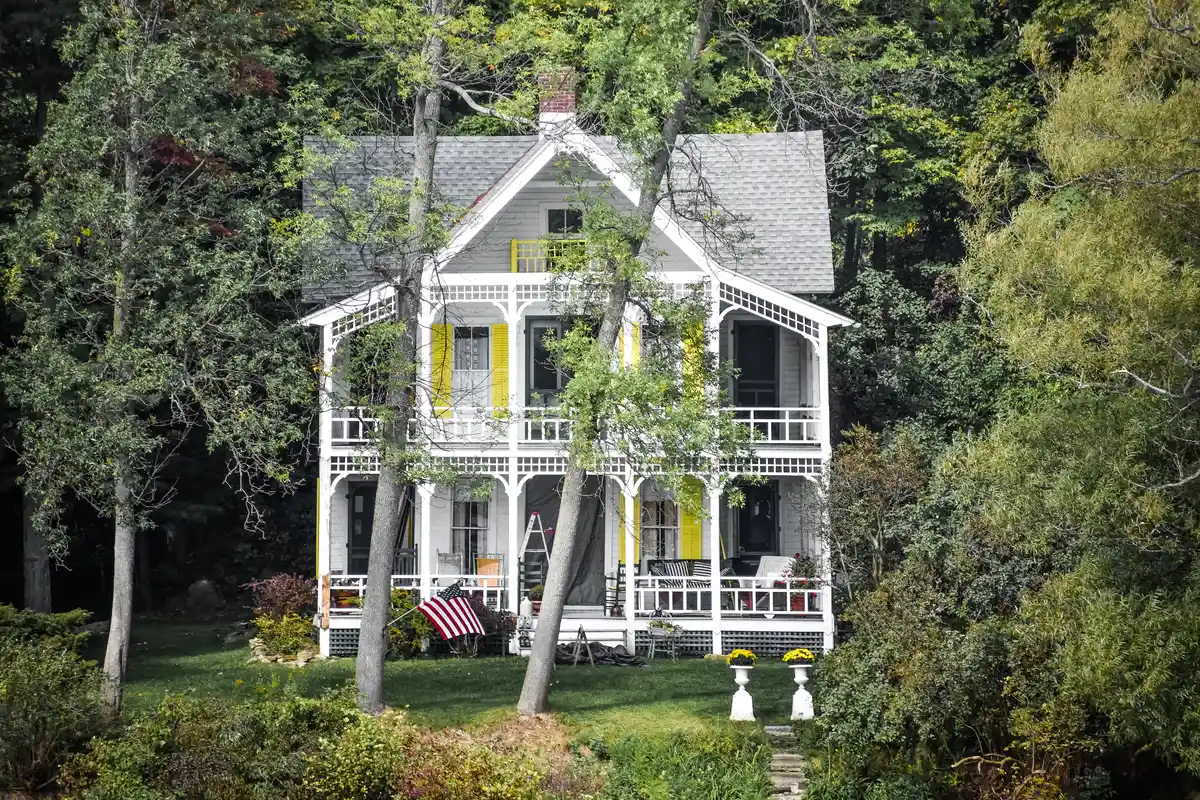
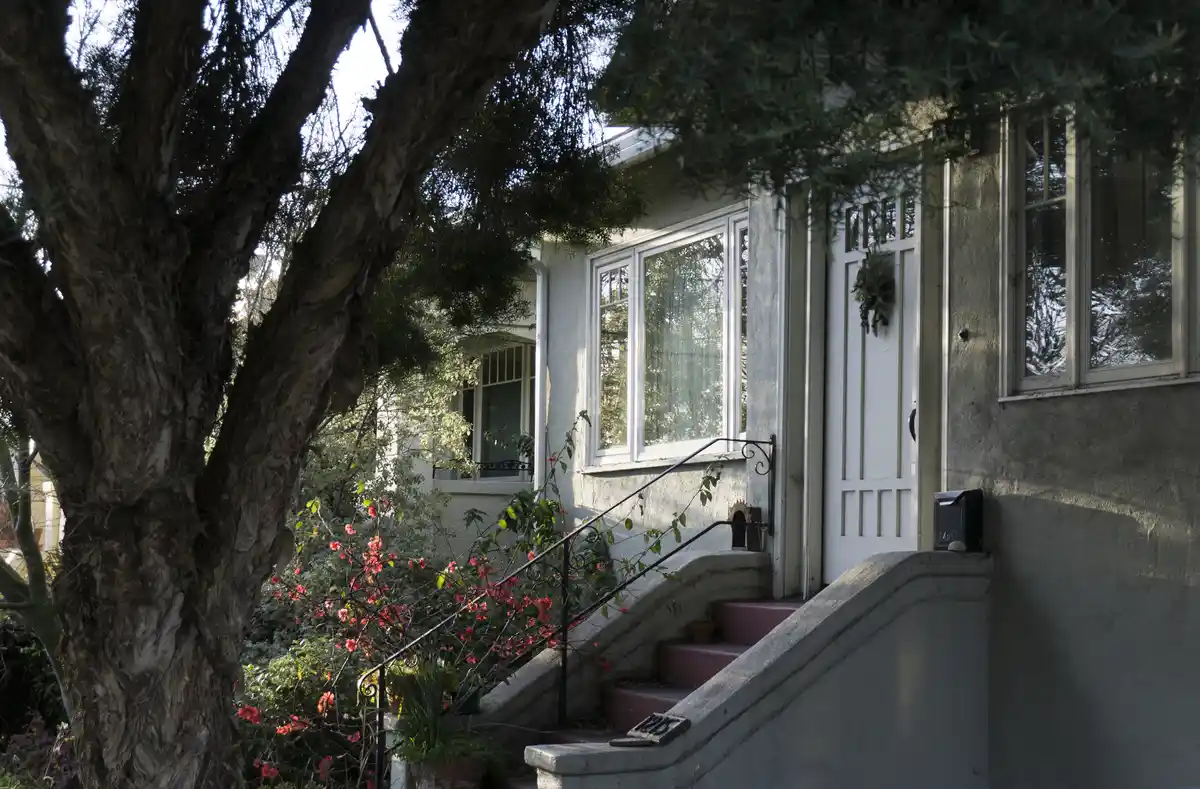
Altadena's architectural character runs heavily toward Craftsman bungalows, Spanish Colonial Revival, and mid-century ranch homes — over 62 percent of the housing stock was built before 1950, with a median year built of 1945. ADU designs that complement these styles include Craftsman-inspired detached cottages with low-pitched gable roofs, exposed rafter tails, and covered porches; Spanish-influenced units with stucco exteriors and clay-tile-look roofing; and clean-lined contemporary studios that reference mid-century proportions. The Altadena Historic Highlands Historic District — established July 2025 as the first historic district in any LA County unincorporated community — now serves as an architectural reference for sympathetic new construction. For fire-damaged lots in West Altadena, Janes Village, and the Meadows, homeowners are choosing designs that honor the neighborhood's original character while incorporating modern fire-resistant materials. Lot sizes in Altadena range from 5,000 to 7,000 square feet in Janes Village to 10,000 to 30,000-plus square feet in the North Altadena foothills, giving most properties ample room for a detached ADU.
Should I choose a prefab modular ADU or site-built ADU in Altadena?
Prefab modular ADUs offer compelling advantages in Altadena's current market. Factory-built units cost $150,000 to $300,000, compared to $200,000 to $450,000 for comparable site-built detached ADUs. Construction happens in a controlled factory environment, eliminating weather delays and reducing waste. Under AB 818 — effective January 1, 2026 — modular housing qualifies for expedited 10-business-day permitting through LA County, compared to the standard 4-to-8-week plan check for site-built ADUs. On-site installation takes 1 to 3 weeks versus 4 to 6 months for conventional construction. The trade-off is customization: modular units come in standardized floor plans (typically 400 to 1,200 square feet), which may limit design flexibility on irregularly shaped lots common in the Altadena foothills. Site-built ADUs allow full customization of layout, materials, and architectural style — important for homeowners in historic neighborhoods like Scripps Tract or Christmas Tree Lane who want the ADU to match existing Craftsman or Spanish Colonial aesthetics. Perfecto Remodeling builds both types and can help you determine the best fit during a free consultation.
Permits, Codes, and Post-Fire Regulations
Who handles ADU permits in Altadena — LA County or LADBS?
LA County Department of Public Works, Building and Safety Division — not LADBS. This is a critical distinction. Altadena is an unincorporated community in Los Angeles County, which means it falls under county jurisdiction, not the City of Los Angeles. Permits route through LA County Building and Safety at 900 S. Fremont Avenue, Alhambra, CA 91803, phone (626) 458-3173. The online portal is EPIC-LA (Electronic Permitting and Inspections for the County of Los Angeles) at epicla.lacounty.gov. Zoning and land use review goes through LA County Department of Regional Planning. For homeowners also rebuilding fire-damaged properties, the Altadena One-Stop Recovery Permitting Center provides unified permitting that combines Fire Department, Regional Planning, Public Health, and Building and Safety reviews in one location. Using the wrong jurisdiction — filing with LADBS instead of LA County — will result in rejected applications and wasted time.
What are Altadena's ADU zoning rules under the Community Standards District?
The Altadena Community Standards District (CSD), codified in LA County Code Title 22, Chapter 22.306, governs building design, setbacks, lot coverage, and architectural character for the unincorporated community. Key CSD requirements that affect ADU placement: front yard setback of 20 feet; side yard setback of 10 percent of lot width with a minimum of 5 feet; rear yard setback of 25 feet for lots under 20,000 square feet or 35 feet for lots of 20,000 square feet or more; and maximum gross structural area of 9,000 square feet. However, California state ADU law preempts many local restrictions. Detached ADUs require only 4-foot rear and side setbacks under state law, overriding the CSD's larger setback requirements. No minimum lot size is required for ADU construction. Detached ADUs up to 1,200 square feet and 25 feet in height are allowed. Junior ADUs up to 500 square feet are permitted within existing structures. LA County must approve or deny complete ADU applications within 60 days per state mandate.
How does AB 818 affect modular ADU construction in Altadena?
AB 818, effective January 1, 2026, is a game-changer for Altadena homeowners considering modular or prefab ADUs. The law requires local jurisdictions to approve permits for factory-built modular housing within 10 business days — dramatically faster than the standard 4-to-8-week plan check for site-built ADUs or even the 60-day state mandate. This accelerated timeline applies to modular units that are manufactured in state-licensed facilities and meet California Building Code standards including seismic and energy requirements. In Altadena's post-fire environment, where nearly 6,000 homes were destroyed and housing demand is extreme, AB 818 provides a fast-track path to adding living space. Modular ADUs arrive largely complete from the factory, requiring only foundation work, utility connections, and final site assembly — typically 1 to 3 weeks of on-site work. Combined with the post-fire permit fee waivers for qualifying homeowners, AB 818 modular ADUs represent the fastest and most cost-effective way to add housing in Altadena right now.
What inspections does LA County require for ADU construction in Altadena?
LA County Building and Safety requires inspections at every critical stage of ADU construction: foundation (before concrete pour), framing (structural integrity, hold-downs, shear walls), electrical (AFCI protection required in habitable rooms per California Electrical Code), plumbing (supply and drain lines), mechanical (HVAC installation), fire sprinkler (required for all new ADUs), insulation and energy (Title 24 compliance verification), and final inspection (all systems operational, certificate of occupancy). For properties in the Very High Fire Hazard Severity Zone — which includes much of northern and western Altadena — additional inspections verify Chapter 7A WUI fire code compliance: ember-resistant vents, non-combustible exterior materials, defensible space clearance of 100 feet, and fire-resistant landscaping. Expect 6 to 8 inspections for a typical detached ADU. Perfecto Remodeling coordinates every inspection and does not consider the project complete until you have your certificate of occupancy.
Choosing a Contractor and Local Specifics
How do I choose an ADU contractor in Altadena after the Eaton Fire?
Start by verifying the contractor holds an active California CSLB (Contractors State License Board) general building license — Perfecto Remodeling's is number 1073777, active through March 2027. After the Eaton Fire, contractor demand in Altadena surged and wait times now run 3 to 6 months for qualified builders. Verify insurance and bonding: a legitimate contractor carries general liability, workers' compensation, and a contractor's bond filed with CSLB. Ask specifically about experience with LA County permitting (not City of LA), Chapter 7A WUI fire code construction, and seismic compliance for the San Gabriel foothills. Request references from Altadena or Pasadena-area projects. Be cautious of unlicensed contractors who have flooded the area post-fire — the CSLB has increased enforcement actions in fire recovery zones. A design-build firm like Perfecto Remodeling, which handles architecture, engineering, permitting, and construction under one roof, eliminates the coordination failures that cause delays and cost overruns.
What Altadena neighborhoods are best suited for ADU construction?
Lot size and fire damage status are the two primary factors. The President Streets in northeast Altadena — ranch-style homes on 8,000 to 12,000 square foot lots — sustained less fire damage than western areas and offer flat terrain ideal for detached ADUs. Scripps Tract features oversized parcels of 10,000 to 20,000-plus square feet with room for full 1,200 square foot units. Central Altadena around Christmas Tree Lane has 7,000 to 10,000 square foot lots well suited for attached ADUs or smaller detached units. In West Altadena, where over 4,600 homes were destroyed, cleared lots present opportunities to include an ADU in the primary home rebuild — sharing site preparation and utility costs. Janes Village lots of 5,000 to 7,000 square feet can accommodate Junior ADUs or compact detached units. North Altadena foothill properties have the largest lots (10,000 to 30,000-plus square feet) but face higher costs due to slope stabilization and enhanced fire zone requirements. Perfecto Remodeling provides free site assessments to determine ADU feasibility for any Altadena property.
What makes ADU construction in Altadena different from neighboring cities?
Three factors set Altadena apart. First, jurisdiction: Altadena is unincorporated LA County, so permits go through LA County Building and Safety — not LADBS (City of LA) or the City of Pasadena Building Division. Applying to the wrong agency is a common and costly mistake. Second, fire recovery: the January 2025 Eaton Fire destroyed approximately 9,418 structures total, with nearly 6,000 homes lost in Altadena alone — the second most destructive wildfire in California history. This created unprecedented construction demand, elevated material and labor costs 25 to 50 percent above national averages, and triggered special programs including permit fee waivers, expedited plan check (first review within 10 business days for fire rebuilds), the Altadena One-Stop Recovery Permitting Center, and LA County pre-approved building plans. Third, the Altadena Community Standards District imposes unique architectural and setback requirements not found in neighboring Pasadena or La Canada Flintridge, though state ADU law preempts many of these for accessory dwelling units.
What financing options exist for ADU construction in Altadena?
ADU financing in Altadena typically involves one or more of these options: home equity lines of credit (HELOCs), which leverage the equity in your primary residence — pre-fire Altadena median home value was approximately $1.3 million, providing substantial borrowing capacity for homeowners with intact properties; construction loans that convert to permanent mortgages upon completion; California Housing Finance Agency (CalHFA) ADU Grant Program, which has offered grants up to $40,000 for ADU construction on qualifying properties; and for Eaton Fire survivors, insurance proceeds combined with FEMA assistance and SBA disaster loans. Some homeowners use the permit fee waiver savings of $5,000 to $25,000 to offset design costs. The strong rental income potential of $2,000 to $3,500 per month helps qualify borrowers for construction financing, as lenders increasingly recognize ADU income in their underwriting. Perfecto Remodeling works with several lenders experienced in ADU financing and can provide referrals during your free consultation.
ADU Construction in Nearby Areas
Other Services in Altadena
View all ADU Construction services across Los Angeles & Orange County.
ZIP codes served: 91001, 91003
Call 844-999-9958 for your free estimate.